Search This Blog

12/13/2011

Homemade Holiday Gifts

     Our family opts for the orbital sander's roar; the sewing machine's rhytmic chug, chug, chug; the dehydrator's hum; and the food processor's high pitched grinding, rather than the constant droning of department store Christmas music. We stay home creating gifts with whatever talents we have to offer: wood working projects, quilts, and specialty foods. 
     During the growing season herbs are dried, fruits and vegetables dehydrated, jams preserved, and vinegar flavored. In December these are used to create specialty granolas, fruit mixtures, soup mixes, flavored sugars, herbed vinegars, herb mixes, and baked goods, to give as gifts during the holiday season.
     Food related gift ideas that can be created using information from previous blog entries are listed below:
  • Flavored sugar: grind 1 tablespoon of dried culinary lavender with one cup of sugar in a small food processor. (Write the recipe for lavender almond biscotti on an attached card.)
  • Granola created using a friend's favorite fruits and nuts.
  • A jar filled with a mixture of home grown dried herbs:     
    • tomato sauce herbs: basil, oregano, and parsley               
    • omlete mix: chives, oregano, sage, and thyme             
    • chicken soup herbs: bay leaf, sage, and thyme
  • Jars layered with ingredients for soups, cookies, or muffins with a card attached with directions.
  • A bottle of herb flavored vinegar.
  • A jar of layered dehydrated summer fruit.
  • Baked goods: cookies, cakes, and muffins                            (cranberry orange muffins are a seasonal favorite).
  • Sachets filled with dried lavender.
      Some people love the excitement, crowds, bargain hunting, and even the sounds of holiday shopping.  If you're not one of them, creating gifts in the home during this season-of-giving may suit you.

11/27/2011

Time for an Emergency Generator? Go Solar Instead.


diycleanenergy.com
      October's snow storm delivered a few feet of wet snow, causing many people in Pawling to lose electricity for an extended period. Because some of these same electricity customers recently experienced and extended outage after Hurricane Irene, friends and neighbors are scrambling to install full house back-up generators.  Wouldn't the $15,000 - $20,000 investment be more wisely spent installing solar panels?

 
venusconstruction.net
     Installing a set of solar panels is more sustainable and economical than installing a back-up generator for the following reasons:
  1. Federal and state incentives make the cost of panels comparable to the cost of a full house generator.  (See resources below.)
  2. The energy created by the solar panels cuts monthly electricity bill; eventually, the panels pay for themselves.
  3. Solar energy is silent. A neighbor has a large generator and the noise is deafening, I can't imagine what it will be like when all our neighbors have a generators running!
  4. Solar panels are powered by the sun—lessening dependence on fossil fuels. Generators are powered by fossil fuels.
  5. Full house generators often use natural gas; this increased demand will encourage the current push to hydrofrack in the Marcellus Shale—an environmentally unsustainable practice.
  6. Well designed systems enable customers to collect money from the electrical company when excess electricity is produced; the electrical meter, in essence, runs backwards. Generators do not generate money.
  7. Solar panels allow the home owner to be less dependent on the electrical grid, avoiding extended outages.
  8. One of the issues that keeps people from purchasing panels is the concern that they are not visually appealing, however, full house generators can also be eye-sores, because they're very difficult to hide.
  9. Solar panels do not pollute. Generators do.
  10.  Solar panel installation supports the development of a green economy.

         Climate change will likely bring us more severe weather, causing more electrical outages.  The decisions we make in our efforts to deal with this new reality can add to the problem, or become a part of the overall solution.

    Resources
  • "The New York State Energy Research and Development Authority (NYSERDA) "provides cash incentives for the installation by eligible installers of new grid-connected Solar Electric or Photovoltaic (PV) systems" http://www.nyserda.org/funding/2112pon.asp

11/14/2011

Leaf Mulch - Sustainable Fertilizer

 
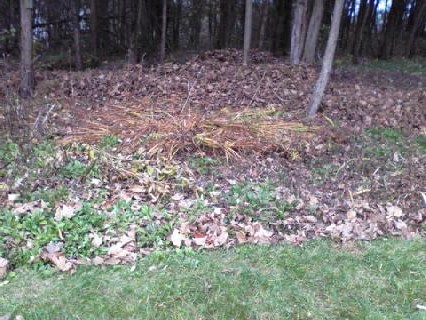
      Autumn leaves, a rich amendment, drift into our yards yearly. Although they must be moved from where they fall to our garden beds, their abundance is welcome because they create sustainable mulch.
     Whole leaves can be raked out of perennial gardens onto old sheets; tossed over the shoulder (Santa style); and spread one foot high between the perennial border and the woods. They effectively keep weeds from invading the garden from the rear during the following growing season, and make a smooth visual transition to the woods beyond.  Because the energy used is "human power", this is an extremely sustainable process.
 
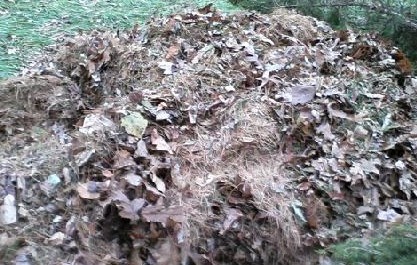
     Creating a mulch that breaks down more quickly—important in the vegetable and perennial gardens—is achieved by gathering leaves with a bagging mower (we borrow a neighbor's) and emptying the bags into a tarp-lined trailer. 
    The collected mulched leaves and grass clippings can be piled high and turned regularly before freezing and again throughout the spring.  This composting creates an excellent mulch for vegetable and perennial gardens. The mower and additional tractor that trailers the leaves both require fuel, so this process is not as energy neutral.  It does however, use less energy than blowing leaves and having them removed from the property.  Because leaf mulch is a "local resource" requiring no transportation to bring it to your property, it is more sustainable than purchasing other mulches.
     This shredded leaf mulch can be used immediately to cover the Fall planted alliums (garlic and shallots) and to protect roses from winter freezing.  In the spring, when composted, it can be used as a mulch in the vegetable and perennial gardens to: conserve water, deter weeds, and add organic matter. Cornell University's Simple Guide to Leaf Composting suggests,  "Composting leaves is an environmentally friendly way to recycle your garden waste into an organic soil amendment and conditioner."

     If you have no need for leaf mulch in your gardens, it makes sense to mulch the leaves in place and allow them to fertilize the lawn. A Bedford based organization, Leave Leaves Alone, offers information for homeowners and landscapers interested in sustainable leaf mulching.
     Autumn brings about an end to one gardening season as we prepare for the next, utilizing this free local resource.

11/06/2011

Apple Leather - Homemade Fruit Roll-ups

     Fruit leathers are a healthy snack that can easily be packed into lunch boxes and back packs, or eaten at home.  As the Autumn apple season winds down, it is a perfect time to purchase the utility size bags at a local orchard to make apple leather. Creating fruit leather is a two part process: first, cook apples down into an apple sauce, then dehydrate the sauce into a "sheet" of fruit, similar to a fruit roll-up.
     There is no need to add sugar when creating the apple sauce because the apples become very sweet when water is extracted in the dehydrator.  Any apples you'd use to make apple sauce can be used to create leather. 
     The following ratio of ingredients works well: 
10 apples (peeled and chopped)
juice of one lemon
1/2 teaspoon of cinnamon
  1.  Mix the ingredients in a pan and cook over medium heat until the most of the apples break down (approximately 45 minutes).  
  2. Spread the sauce on a slightly oiled leather sheet (or plastic wrap) 1/4" thick (somewhat thinner in the middle and thicker at the edges).  
  3. Dehydrate it for 8 - 12 hours until the texture is "leathery" and there are no moist areas.  
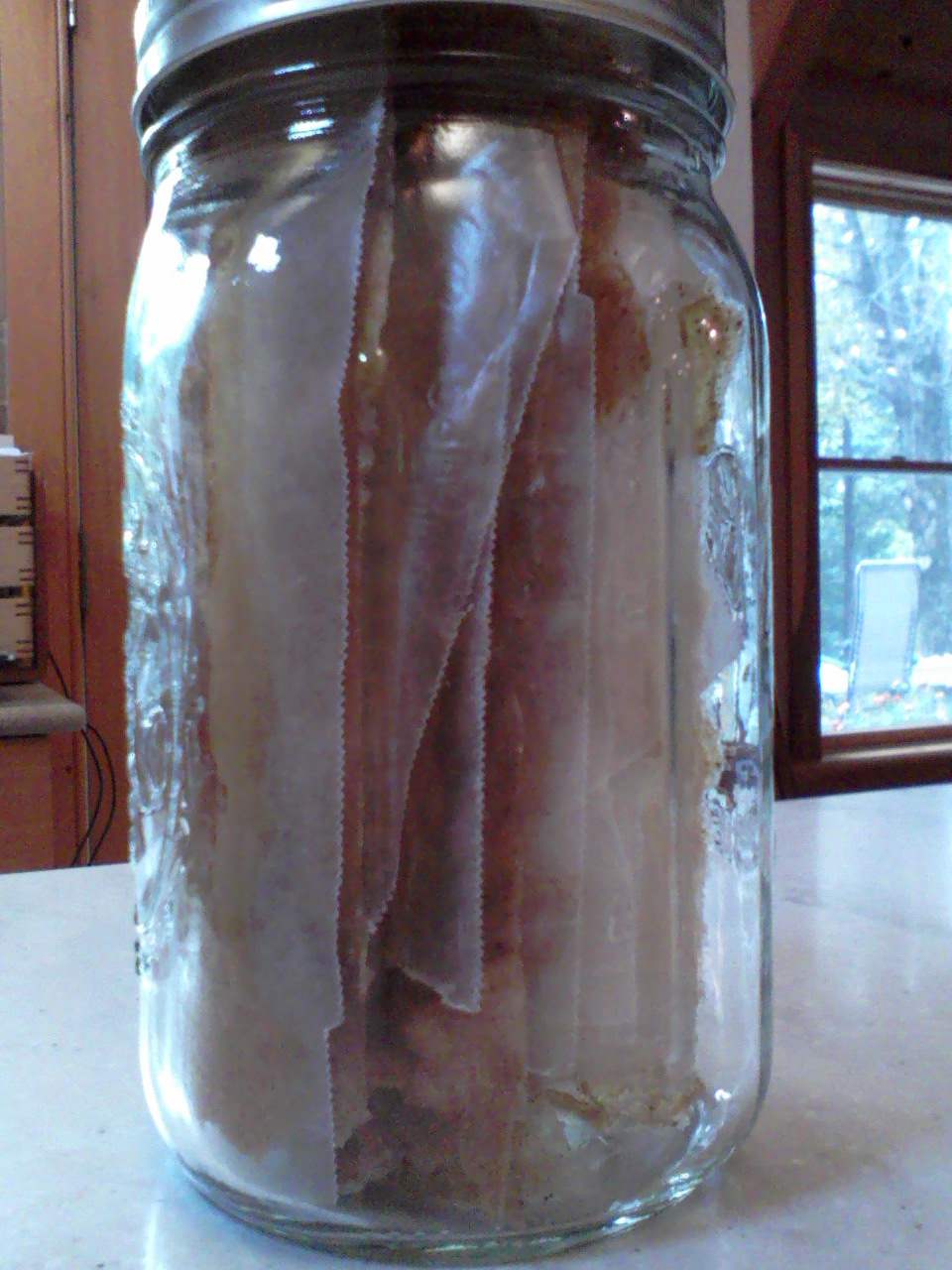
  4. The leather can then be cut into pieces or rolled up.  Separate with  wax paper and store in large canning jars.
     Apple leathers can be used as easy-to-pack snacks; broken into smaller pieces and added to granola, cookie dough, or trail mix; or re-hydrated by placing in boiling water to use as a side dish for pork. 
   Preparing apple leathers extends the apple season throughout the winter months, supports local farmers, and supplies readily available, healthy snacks for your family.

10/24/2011

The Visual Appeal of Cover Crops

     Cover crops are helpful in the garden for a variety of reasons: they add nutrients, break up compacted soil, add organic matter, and keep weeds at bay.  However, for vegetable gardeners who started their gardening lives as landscape gardeners, they serve an even more important role: they keep gardens looking lush.  A cover crop planted as soon as each vegetable is harvested helps avoid vast brown areas in the garden as the season draws to an end, extending it's summer beauty into fall.  Gardens that would otherwise look dull and depressing display color, texture, and fresh spring colors.  The different cover crop heights, due to planting that takes place over a period of a month or so, add appealing height variations.  The fresh green growth contrasts with the darker pepper, cabbage, and leek plants.  It doesn't hurt to let the nasturtiums, marigolds, and cosmos, planted earlier for pest control, grow wild throughout the cover crops, adding splashes of yellows, oranges and lavender.  In the fall, as cover crops do the hard labor of preparing the garden for spring planting, they also transform vegetable gardens from late season eyesores into landscape assets. 

10/20/2011

Cornell's Garden Soil Testing


     A fall chore that's definitely worth the time and the minimal expense ($15) is testing the soil in my vegetable garden. Cornell Cooperative Extension in Millbrook, just a half hour drive from Pawling, offers this valuable service to gardeners on a "walk-in" basis. Soil samples are sent to Cornell's Agricultural department in Ithaca, which tests the soil's chemical composition, and, within a few weeks, e-mails a complete soil analysis. The detailed report shows levels of important nutrients (phosphorus, potassium, calcium, and magnesium); measures pH; determines organic matter percentage; and makes suggestions for needed amendments (lime and fertilizers) to maximize soil productivity. 
      On Tuesday, when my garden was dry, I took sample of my garden soil by scraping the top 6 inches of soil to the side; scooping a small amount of soil into bucket; and replacing the top layer. I repeated this in four more areas of the garden—in order to collect a representative sample; then mixed the soil, and placed two cups of this soil into a plastic bag.
      Today, I drove the scenic back roads (routes 82 and 44) off route 55 to deliver my soil sample.  (For those who live outside the Dutchess area, there are dozens of other Extension offices throughout New York State.  Soil samples can also sent directly to Agro-One for testing using a soil submission form.)
      In a few weeks, when my report arrives, I'll add the suggested amendments in organic form, giving them plenty of time to work their magic on my soil before planting my Spring vegetables.

9/04/2011

Freezing Summer Flavors

      In late summer, as some annual herbs remain bushy (basil and parsley) and some perennial herbs are starting to fade (sage and tarragon), it’s the perfect time to freeze summer’s flavors by creating herb cubes.  They take only a few minutes to prepare and require no special equipment.  

Select the herbs you would like to use in a winter soup or sauce.
(You can also create cubes of individual herbs.)
Mince all herbs except bay leaf; preserve it whole. 


Place herbs in an ice tray or small containers and cover with water.
Remove cubes from containers and place them in a bag in the freezer until needed to flavor a winter dish.