Search This Blog

12/02/2012

Purchase Power


To view a larger, more readable version, of this chart go to Cornucopia.org;
 click on the chart to enlarge.
       Money is power--politically speaking--and when I make purchases, I am channeling my money to companies that can then use that money in the political arena.  When I spend money on a product, I support the company that sells that product.  When I withhold spending on  a specific product, I withhold my support for not only the product or label, but the larger company, as well.
     Cornucopia's chart shows the amount of money different companies spent to support or oppose Prop 37, which would have require labeling of GMO’s.  Since I support GMO labeling, a concrete action I can take is to purchase organic products from companies that support my “right-to-know”.   It's a simple, effective way to make a personal statement.
     I can't compete with the millions of dollars spent to fight the labeling legislation, but I can funnel my family's grocery money to companies that support the causes we value.


11/25/2012

Yoga, Sustaining Body and Mind

     While standing on one foot in a contorted yoga balancing pose…for what seemed like an eternity…I thought, “Yoga deserves space on this blog, because it sustains me, body and mind”.  It helps me feel refreshed, strong, flexible, balanced, and focused, while adding very little to my ecological footprint--especially when done at home or at a location that's close enough to ride my bike.
     One of the best aspects of yoga is that there are few, if any, supplies needed.  A mat is useful, but a carpet works just as well.  Comfortable clothes and some relaxing music are helpful.  Poses can be done indoors, outdoors, in small rooms with a few people, in large studios, or in any room where the furniture is simply moved aside.
     Yoga is one of those life-long exercises that is practiced everywhere along the age continuum.  It can be adapted to meet most people’s needs, even well after many other exercises are no longer possible.  There is rigorous yoga, regenerative yoga, and even chair yoga.  It relieves stress and anxiety, increases range of motion, builds bone density, strengthens muscles, increases flexibility, and improves balance--to help prevent falls.
   
Local yoga classes that fit a variety of schedules and budgets:

Ensure a minimal footprint by purchasing "eco-responsible" mats and recycling your old mats at RYM.


     Yoga keeps me on my "tiptoes" physically, mentally, and ecologically.

11/21/2012

Starting The Day off Right


    Eating breakfast is an effective way for adults to help control body weight, because it keeps us from overeating during other meals--perhaps it would be a perfect way to start the day tomorrow, before the Thanksgiving feast.  A healthy breakfast also supplies children and teens with the needed energy for improved: memory, concentration, attention, creativity, mood, productivity, behaviors and school performance. (http://www.ufl.edu)

     Eating granola for breakfast is a terrific way to begin the day with a hearty whole grain meal. Choosing a granola sold by a company committed to organic food production using only organic ingredients, without GMO's, is simple with the Cornucopia Institute organic cereal score card.  It rates brands using a one to five "wheat" rating system. Companies with the highest rating have the strongest commitment, "100% of the brand's cereal and granola products are certified organic/by fully committed organic company."

     Or, you can make your own granola.  Then you control all the ingredients, and choose the nuts, spices, and sweeteners, so you can create hundreds of different varieties by experimenting with a basic recipe.

Granola
Mix in large bowl: 
10 cups uncooked regular oats
¾  tsp. cinnamon
¼  tsp. cardamon
¼ tsp. salt
1 cup chopped nuts 
¼ cup brown sugar (optional)

Combine and add to dry ingredients, mix well
½ cup honey and/or maple syrup
½ cup Safflower oil
¼ c water  
1 tsp. vanilla

Add after baking:
1 cup dried fruit 


  1. Combine dry and liquid ingredients.
  2. Spread on two lightly oiled cookie sheets.
  3. Bake at 275°F for 50 minutes (until crispy), stir only once after 15 minutes.
  4. Let cool.
  5. Stir in fruit.
  6. Store in glass preserving jars.


   Eating organic granola, whether it is purchased from a responsible company or created in you own kitchen, is a great way to begin the day.


10/16/2012

Saying “No” to GMO’s


     The full length documentary, Genetic Roulette--The Gamble of Our Lives, details the negative health effects of GMO's, genetically modified organisms (the above video is a 10 minute remix). GMO’s are created by taking a DNA from the cell of one species and inserting it into another species to create a desirable trait.  In food, those traits include longer shelf life, pest resistance, and herbicide resistance. This scientific manipulation is widely used; it affects much of our food supply and, as mounting evidence indicates, our health.
     As consumers, we have the power to force the food industry to reject genetically modified foods, by simply refusing to buy them.  The "Non-GMO Project" offers four ways to avoid GMO’s in our food:

Buy Organic
Certified organic products cannot intentionally include any GMO ingredients.

Look for "Non-GMO Project" verified seals.
This independent groups verifies that individual products have not been genetically modified. 
    
Buy Products listed in the Non GMO Shopping Guide 


                                                        "Avoid at-risk ingredients including: 
                                                                          soybeans
                                                                            canola
                                                                         cottonseed
                                                                              corn
                                                                sugar from sugar beets
If a non-organic product made in North America lists “sugar” as an ingredient (and NOT pure cane sugar), then it is almost certainly a combination of sugar from both sugar cane and GM sugar beets. 
 GM alfalfa is also fed to livestock.
Dairy products may be from cows injected with GM bovine growth hormone,
look for labels stating No rbGH, rbST, or artificial hormones."*

10/15/2012

The Sustainability of India's Modernization


                Akash Kapur, an Indian born Rhodes Scholar, addresses sustainability on a national level. After living and working in New York City, he returns to India in his twenties with the hope of raising a family in the idyllic Indian countryside of his childhood.  He describes the economic and cultural changes that have taken place during the decade he was away through interviews with people of differing ages, lifestyles, and locations.  Although he acknowledges the recent economic development has brought some benefits: less caste discrimination, more non-agricultural jobs, wealth for some, and improved infrastructure, he questions the development’s sustainability.   The impacts of over population, air and water pollution, economic inequity, loss of tradition, and geographic separation of families are significant, as people rush blindly toward modernization.
The author comes to terms with how India’s development is impacting the environment and the health of the people he is studying, as well as his own young family’s.  He wonders if the growth is, “built on the backs of the poor and the ruins of the environment,” rather than, “economically inclusive and environmentally sustainable.”  He realizes that the new materialistic attitudes in India have created serious waste issues.  Product life cycles are not taken into consideration when the new found wealth encourages people to purchase more and more, adding tons of non-biodegradable garbage to overfull landfills.  He is torn between his enthusiasm and excitement over India’s short term modernization, and the concern he has for the country’s future.  

9/27/2012

Plant Garlic Bulbs in the Fall.


Five Reasons to Plant Garlic this Fall

·         When the gardening season winds down and the harvest is waning, it's great to initiate new life in the garden by planting bulbs.

·         It offers a practical use for the season’s final leaf / grass collection.  (A thick layer of mulch protects the garlic bulbs from the winter’s freezes.)

·         Once planted they require no attention until spring.

·        Like crocuses in the flower garden, they bring the first hints of color to the spring vegetable garden.

·         After the first season's purchase, bulbs from each year's harvest are used to plant the next year's crop.      


 Plant garlic in October (here in Dutchess County), 
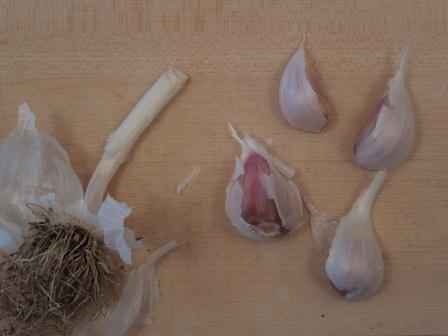
by simply separating and then planting the individual cloves two inches deep.

         If you've never grown garlic, this Kitchen Gardeners You Tube video shows you how:


7/20/2012

Local Wild Wineberries


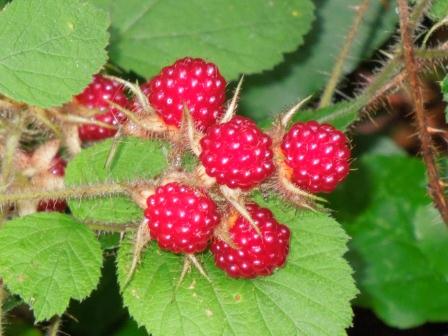
     An exceptionally juicy treat is growing wild all throughout Pawling right now. Wineberries are currently ripe on their vines, and can be found in parks, at the edge of wooded areas, along roads, and along hiking paths.


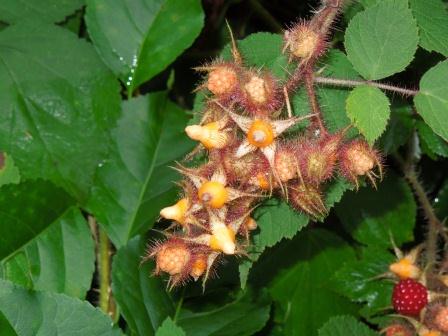
     They are easy to identify due to the conic stub that remains when the berry is pulled off the plant, so even those who are generally leery of eating wild berries can partake. The flavor is an unique mix of sweet and tart.

     When the berries turn from burnt-orange to red, they’re ready to harvest. The berries easily slide off the cone shaped tip when ripe. There are many thorns on the stem and along the leaf spine, so they must be picked carefully. The flavor, however, is definitely worth a few thorns.


Wineberries do not store well, so once picked, they should be eaten or preserved:
     They are excellent eaten plain, in cereal, over ice cream, baked in tarts, canned or dehydrated.

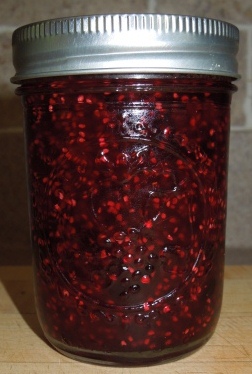
     Wineberries can be used to replace raspberries in canning recipes.   They have an intense berry flavor so they make excellent jams and sauces.


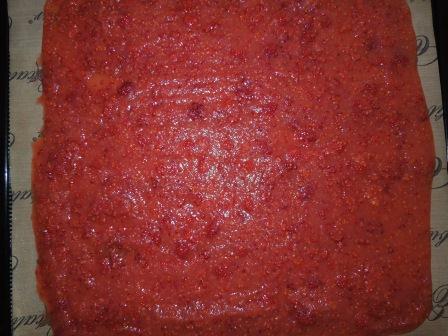
     Wineberry "leathers" can be made by mixing apple sauce with berries and dehydrating. The leathers create an easy to carry fruit snack or can be broken apart and added to cookies, muffins, and granola. (See below.)


Wineberry Leather
  
1.  Wash and clean berries. 
  
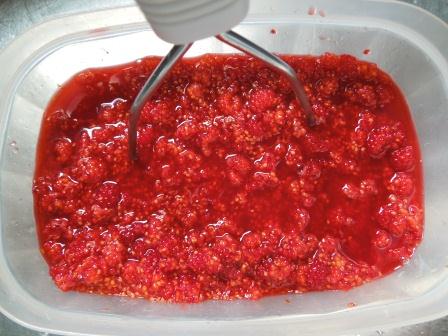
2. Crush the berries. 

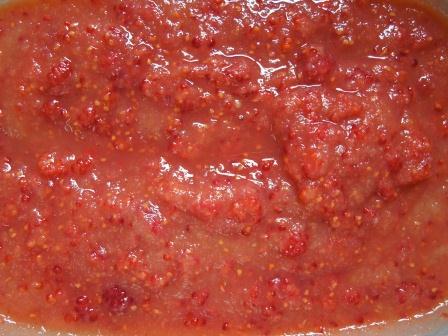
 3. Mix equal parts berries and apple sauce. 

4. Spread on leather sheet on a dehydrator tray and dehydrate for 8 - 10 hours at 135°.

5. Cut into serving pieces. Store in jars; separate layers with wax paper .