Search This Blog

3/30/2011

Spice Up Your Life with a Culinary Herb Garden

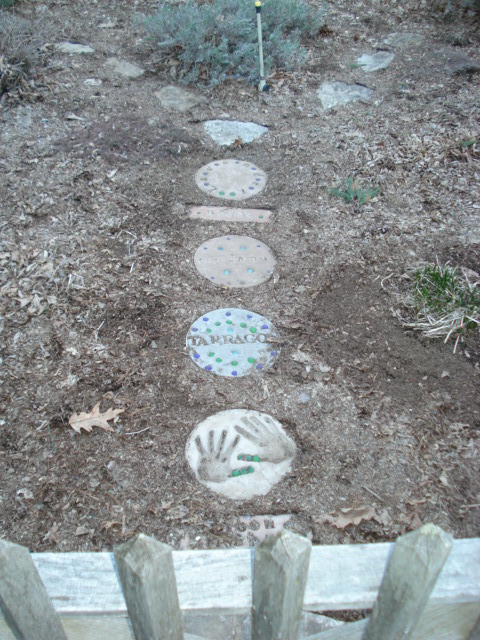
Stepping stone
     Imagine walking out the door and stepping into a fragrant garden to gather fresh herbs for a dish you're creating.  If you have a small sunny area near your door (preferably a kitchen door), an herb garden could easily become a reality.  Herbs are simple to grow, requiring only fertile soil and six hours of sun.  Herbs are fragrant (my favorite garden to tend), abundant (harvesting encourages more growth), and they are the essence of fine cooking.
     Deer are rarely attracted to herbs (a three foot fence protects mine easily).  Because most have lovely greenery and attractive flowers, you can simply add a few of your favorites to a sunny flower garden. Planting a small plot with the herbs that you use the most in cooking, will supply you with fresh or dried organic herbs throughout the year for a minimal annual cost.  
     Some dependable culinary herbs for a beginning herb garden in New York are:
perennials (chives, sage, oregano, tarragon, thyme, and lavender)and annuals (basil, parsley, coriander, rosemary, dill, marjoram, and bay leaf). 
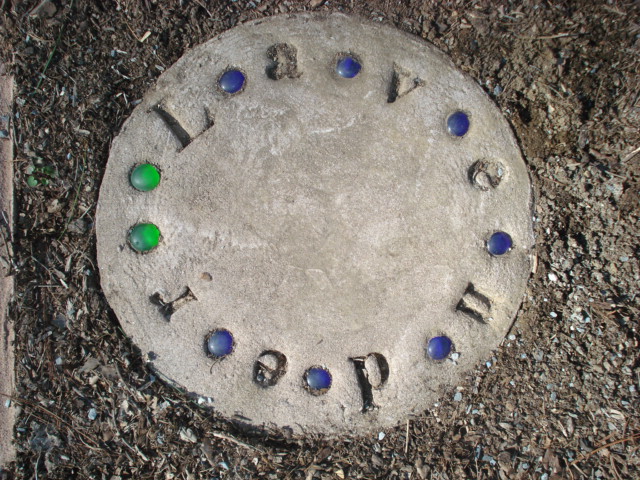
     Plant the perennials as soon as the garden area is ready in spring; plant annuals after the last frost.  Create paths in the garden to allow for easy access to each plant for continued harvest.  We use either my daughter’s stone creations or flat stones from our woods.  Use whatever is readily available (gravel, stones, slate pieces…) but make sure they are comfortable to step upon.  If the stones are too small or rounded, you’ll feel as if you are walking on a tight rope each time you harvest.
       If you would like more specific information about growing an herb garden, Skills Off the Grid is offering an herb garden workshop this Saturday at Hanover Hill Farm in Yorktown. 

3/28/2011

It's Almost "Thyme"

Herb garden struggling to come back to life.
     Temperatures rise enough during the day to tempt my herb garden to send out savory greenery, then they crash below freezing again each night.  While waiting for my herbs to revive—and become my living spice cabinet once again—I enjoy the next best thing: the herbs preserved from the garden last season.  They connect me to the garden and supply me with organic herbs until the garden is able to share its seasonal bounty. 
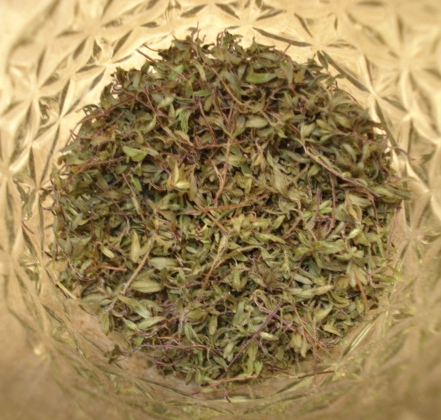
Dried thyme sprigs.
      A dozen sprigs of dried thyme flavor my vegetable soup (see recipes) made with a mix of dehydrated vegetables from the garden.  The scent of thyme coming from the simmering soup, intensifies my anticipation of the fragrant days ahead in the herb garden.

3/25/2011

Sustainable Table Settings


     A few weeks ago while helping a friend set her table, I opened her closet to find shelves piled high with hundreds of cloth napkins left to her when her mother passed away.  It motivated me to increase my own supply to avoid running out and having to grab the paper.  I realized that the possibility of filling my napkin draw to overflowing was a simple one, since a neighbor had given me a box of extra fabrics a few years ago.  I chose some large pieces of fabric that coordinated with my place mats and began to sew. 
     Creating cloth napkins from fabric in three simple steps:
Cut 18” squares of fabric.
Iron 1/8” along rough edge of fabric and iron flat.
Immediately fold the already folded fabric over 1/4” and iron flat.
Continue until all four edges are ironed.
Sew a running stitch along all ironed edges with machine or by hand.
     Now, a few weeks after my visit, closing my napkin draw is like squeezing an overly indulgent eater into a corset, but I'll never have to worry about resorting to paper napkins again.

3/23/2011

Celebrate World Water Day

        I am grateful today for our constant supply of clean, delicious water, yet cognizant of the vast number of people in the world who do not have this basic life necessity.  To acknowledge World Water Day today, I recalculate my personal water usage: H2O Conserve and set a new reduction goal. To focus on the in world's water issues, I also sign a petition requesting that Congress addresses the global safe drinking water issue at the Natural Resources Defense Council's site.
      A few years ago, I installed drip irrigation in my vegetable garden and was pleasantly surprised that it was inexpensive and relatively easy to set up.  Since the drip tape is placed below the mulch, very little water is wasted, supplying the plants with water, rather than sending vapor into the air.  
     In my flower gardens I've found that the lowest water users are native perennials planted in the appropriate environment.  Over the years I have also come to truly appreciate shade gardens due to their minimal need for supplemental water.

     Since I'm conscious of the fact that a product’s life cycle generally includes a significant amount of water in manufacturing, I try to recycle as much as possible.  Creating one can from another, for instance, uses much less water than manufacturing the original can, so I try to avoid ending an item's “life cycle”.    I'd like to be able to recycle more than is currently possible at Pawling’s transfer station.  At Earth 911's site, I located a company that recycles for all of Dutchess County: Royal Carting, 409 Route 82, Hopewell Junction, NY 12533, (845) 896-6000, (800) 522-7235.  Their website states that they accept following items not currently recycled at the Pawling transfer station:
·           Plastics #3 , #5, and #7 
·           Telephone books, paperback books, junk mail (including envelopes and coupons)
·           All dry, loose or bagged white and colored ledgers
·           Copy paper, note pads, loose-leaf fillers, computer print-outs
·           Single wall, non-corrugated boxes used to package dry food
·           Cereal boxes, shoe boxes and other similar packaging
·           Paper egg cartons, construction paper 
They assure me that as a Pawling resident I can utilize their transfer station for a small fee, a dollar or two.  So my goal for World Water Day is to bring these items to Hopewell monthly and expand my water (and other natural resources) saving efforts. 

3/21/2011

Growing Peas – Like Boiling Water


Growing peas is to gardening what boiling water is to cooking.  Because cultivating peas require minimal skill, they’re probably the best vegetable for beginning gardeners.  They:
  •     need no fertilizing
  •     can be planted directly into the soil as soon as the soil is workable (I planted mine in my Pawling garden over the weekend)
  •      do not require thinning
  •      display a delicate blossom before producing fruit that resembles a snap dragon
  •      are one of the earliest producers
  •      yields pea pods over a long period of time
  •      offer gardeners rewarding "gardening snacks" throughout the season.
The only things they require are supports to climb (a fence, a tepee style set of poles, a large branch stuck in the ground near its roots, or string tied to an overhead pole…) and occasional help as they begin climbing.  They seem to be able wind around anything, but sometimes need a human hand to connect their curling stem to the support.
If you’ve never attempted peas before and need help determining where to begin, Barbara Pleasant, of Mother Earth News, offers these descriptions of the four categories of peas and detailed information on the website: 
  • Snap peas are eaten whole, and both the crunchy pod and the peas inside taste sweet. Snap peas yield more food per square foot than the other types.
  • Snow peas produce tender, flat pods that are eaten whole. Snow peas also produce the most tender vine tips for adding to salads or stir-fries.
  • Shell peas are often called English peas, because many fine varieties were developed in Great Britain in the 18th century. Sweet green peas are shelled from tough, inedible pods.
  • Soup peas produce hard, starch-filled seeds for drying inside inedible pods. Seed size and color vary with variety.

 Happy Spring

3/18/2011

On the Edge

     As spring approaches, all shades of green slowly seep into our dormant gray landscape. It's time to begin clearing out garden debris and planning garden area changes.  The edging of a garden impacts maintenance of the garden for years to come, so I give special attention to making sure the edging is effective, will require minimal labor annually, and is sustainable.  
      Over the years I have come to rely on two techniques that enable me to create gardens without purchasing pavers, plastic, or metal.  My preferred method is to simply allow the garden to take over an entire area: a shade garden beneath large maples in the center of a circular driveway; plantings encircled by large structural boulders or patio stones; or greenery between a building and walkway.  Whenever lawn or woods are not adjacent to the garden, there is no need to add edging material.
     If total enclosure is not possible, I generally use an "air wall" to stop the grasses and weeds from encroaching on the gardens.  Since roots cannot grow into air, this edging technique  protects the garden from unwanted intruders.   
 barnyardproducts.com
Digging down seven inches into the grass at 90 degrees with an edging spade, and gradually sloping the soil back toward the garden, leaves room to apply three inches of mulch and still maintain a four inch wall of air to block the lawn’s roots.  Re-edging annually to take out any roots or weeds that have worked their way into the garden area keeps the edge neat.  This yearly edging is easier than the original digging since it involves merely re-cutting in the same place, cleaning the “edge” of dirt and debris, and reapplying the mulch.

3/16/2011

Answerable Ancestors

     Mark Hertsgaard’s Hot – Living Through the Next Fifty Years on Earth can be summed up in a quote he offers from Kevin Danaher, an activist and co-founder of Global Exchange who encourages local green economies, “We must learn to be good ancestors.”  
     The book explores the realities of climate changes that will impact our lives, and highlights programs around the world that are bringing about significant, positive changes.  He uses examples from places like Bangladesh, the Netherlands, and Washington State to encourage us to push for a “Green Apollo” to “mobilize public and private resources in all countries”.  He acknowledges that policies must be transformed at the top and quotes Barack Obama's pre-election words, “Change does not happen from the top down.  It happens from the bottom up… [People] arguing, agitating, mobilizing, and ultimately forcing elected officials to be accountable…That’s how we’re going to bring about change.”
     Throughout his book, Mark Hertsgaard continually reflects on his concerns for his young daughter’s future in a warmer world; any parent, aunt, uncle, grandparent, or caring human being, will connect with his anxiety about the future we are leaving for the next generation and the urgency to avoid further climate changes, while we adapt to those that are inevitable.