Search This Blog

3/11/2011

GoodGuide's Product Rating


     GoodGuide's (http://www.goodguide.com/) goal is to help consumers find the safest, healthiest, most sustainable products available. They help us make informed decisions by rating thousands of products’ impact on: health, the environment and society.   There are three ways to access this guide, via text message, online search or by using an iPhone app to scan a product’s bar code . 

     When using the online resources, you can either search for a specific item, or go to a category and see the “best” and “worst” products.  A simple score (from 1 - 10) based on health, environmental and societal impacts is given.  You may, however, click on one of the three branches to see subtopics that offer much more information, including: resource management, labor and human rights, diversity, customer satisfaction, water use, and corporate ethics, to name just a few. The site also contains links to Twitter and Facebook so you can let your friends know what you've discovered about a product. 
     Many factors influence our purchasing decisions.  The GoodGuide product rating guide empowers us to move beyond buying based on price exclusively.  As informed customers, we can use our “power of the purse” to support the most sustainable and ethical companies.

3/10/2011

For Lawns, Less is Better


     Some of my fondest memories of time spent with my daughter have been on our lawn: lying on the cool, lush green grass under the towering pines; talking while gazing up at the clouds; passing the soccer ball; or running full speed for the tossed Frisbee. 
     I have often read that grass is one of the most unsustainable choices for our landscapes due to the use of fertilizers, herbicides, water, and petroleum fuels.  The Union of Concerned Scientists’ fifth, and final tip, to help create a climate friendly garden, is to minimize lawn fertilizers and watering (http://www.climatefriendlygarden.org).
    They encourage application of the least amount of fertilizer possible and recommend that grass clippings be left on the lawn as an organic fertilizer.  They explain that raising the mower blade to three inches above ground or higher encourages deep roots; avoids drying out the grass; and increases carbon storage.  They emphasize the importance of choosing the right grass for our area by using our local Cornell Cooperative Extensions as a resource for low-maintenance grasses or ground covers (http://ccedutchess.org/aghort/community-horticulture).
     Interestingly, they also report that a growing body of research indi­cates that soils covered in turf grass­es can capture and store significant amounts of carbon. Unfortunately for us lawn lovers, a small number of newer stud­ies, have shown that lawns have the potential to generate heat-trapping nitrous oxide (especially when over watered).
     So for now, we can minimize watering; mow at a height of three inches; use less (and organic) fertilizers; use corn products as pre-emergent weed killers; and leave the cut grass clippings on the lawn, to eliminate many of the negative impacts of lawn maintenance.  Once a practical solar mower is marketed to use on lawns that are too large for electric or push mowers, we'll be able to wiggle our toes in the grass with childhood abandon and a clear conscience.

3/07/2011

Compost - Garden's Gold

Open collection bin for kitchen scraps and herb garden debris.
     Compost is at times referred to as “black gold”, a fitting description of a material that is so easy to make, yet extremely valuable in the garden.  I’ve created compost using a variety of simple techniques: making a pile under a tree in the back yard; filling a small fenced area; mounding chopped leaves and grass; and loading purchased compost bins.  Some methods cause decomposition more quickly, but they all create amazingly rich humus to use in potting mix, to amend the soil, or as mulch.
Covered bin for kitchen scraps when open bin is full.
     “Turning garden and kitchen waste into compost reduces heat-trapping methane emissions from landfills, improves your garden’s soil, and helps it store carbon.” Creating compost is The Union of Concerned Scientists’ fourth tip to help create a climate friendly garden: http://www.climatefriendlygarden.org.   A Green Guide to Yard Care (see resources below) states, composting creates a humus-rich material which contributes nutrients and beneficial life to the soil, improves soil structure, and helps prevent runoff.  It helps soil absorb and retain nutrients and moisture, and protects plants from diseases and pests.

Partially decomposed kitchen scraps inside above compost bin.
Resources:   
1.      A Green Guide to Yard Care (www.natureswayresources.com/DocsPdfs/greenyc.pdf) is a great resource for compost bin designs, ingredients, troubleshooting problem, and uses.  
2.      This Cornell site offers detailed information about creating and using compost (http://cwmi.css.cornell.edu/compostbrochure.pdf).

3/04/2011

Think Trees

Mother's Day dogwood tree.
          The Union of Concerned Scientists’ third tip to help create a climate friendly garden, is to plant large shrubs and trees.  “If you have space in your yard, plant­ing and maintaining one or more trees or large shrubs is an excellent way to remove more heat-trapping CO2 from the atmosphere over a long period of time.”  (http://www.climatefriendlygarden.org).
     Each spring, in March, my family asks me to start thinking about what I’d like for Mother’s Day.  Some years, the gift has been a tree: a graceful Japanese maple, a shapely dogwood, or a slender witch hazel.  Others, it has been a shrub: a snowball viburnum, an oak leaf hydrangea, a classic lilac, or mountain laurels reminiscent of our favorite hiking trails.  It's even been a truck load of composted mulch to layer below existing trees.  These are truly gifts that keep on giving.  These plants’ color, structure, texture, and fragrance grow more spectacular each year. 
        Although “maintaining” an existing tree isn’t nearly as exciting as buying a new one, it’s probably even more important.  My husband and I spend much more time each year trying to keep our property’s trees alive than we do planting new trees.  Aggressive vines can bring cedars down in a few years if not clipped at the base.  Barberry, Russian olive, bittersweet, and choke cherry require constant cutting back to keep them from taking over a wooded lot.  Cutting dead branches and thinning around large healthy trees encourages desirable, native trees to thrive—sequestering CO2. 
Cedar stand with vines and barberry removed.
     May 8th will be a time to celebrate with our other mother, Earth—perhaps by planting a new tree.

3/03/2011

Minnewaska on my Mind


    While crunching on a spoonful of blueberry granola, I close my eyes, and imagine hiking the Blueberry Run trail in Minnewaska State Park on a warm July morning. The high bush blueberries call to me as I walk past, begging me to try a few, which I unfailingly do.  Dried blueberries contain the same intoxicating summer flavor, even when the thermometer registers 12 degrees—March is “coming in like a lion”.  
 
     Making my own granola allows me to avoid preservatives, create the mix I prefer, incorporate my dehydrated summer fruit, and save money.  Since I buy most of the basic ingredients in bulk, I am able to purchase organic at prices comparable to conventionally grown food.  Dehydrating fruit at home also allows me to avoid unnecessary preservatives and high  prices.  I use the same basic recipe each time, but as my family will tell you, it never tastes the same twice; like all permutations, the variations seem endless. See recipes.

3/02/2011

Cover Up with Cover Crops

etc.usf.edu
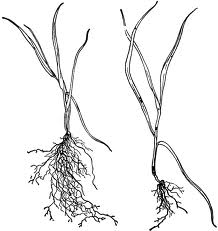
    “Don’t leave garden soil naked,” recommends the Union of Concerned Scientists, in their second tip to help create a climate friendly garden, http://www.climatefriendlygarden.org. They suggest that you, “Stabilize, build, and add nutrients to garden soil that would otherwise remain bare by planting winter cover crops such as grasses, cereal grains, or legumes.” This practice also keeps carbon from being released into the atmosphere. 
     Last fall I spent a morning in my sister’s kindergarten classroom sharing the value of cover cropping with a group of extremely enthusiastic gardeners.  We acted out: an oat growing—struggling to push the soil apart; dying—laying down its grasses; and then a tomato plant easily growing in its place.  The young gardeners demonstrated the science behind cover cropping by drawing the step by step process of an oat plant growing long roots into the soil; dying--covering the ground with biomass; and then its decaying roots opened spaces to allow the tomato plant’s roots to grow easily.  At five and six, they already understood the benefits cover crops offer their school courtyard garden.
Oat cover crop capped with icy snow.
     In my home vegetable garden, I've used oats as a cover crop for the past few years.  I cut the oat grasses back to approximately a foot high when they look close to "going to" seed, to keep the seeds from becoming future “weeds” among the vegetables.  This annual (a plant that needs to be replanted each year) requires no rototilling--turning over of the soil--in spring. I simply move the dead grasses aside, and plant the seedlings in the soil, allowing the new roots to tunnel through the oat roots’ open pathways, while the die-back left from the grasses protects the soil like mulch. 
     There are a number of other cover crops available (peas, beans, clovers, and other legumes) that will “suppress weeds, prevent erosion, improve soil fertility, store carbon, and supply all of the nitrogen needed for the next season’s plants to thrive.”
    It may be a while before I can plant my seedlings among my garden’s oat debris this year, since there is currently a foot of icy snow covering my cover crop.

Barbara Pleasant offers information on specific cover crop plants for Mother Earth News: www.motherearthnews.com/Organic-Gardening/Cover-Crops-Soil-Nutrients.aspx.


3/01/2011

Daffodil Bulbs Burst in Pawling


Daffodil bulbs burst
bringing exponential joy.
The winter's muted pallet
of ice and snow
melts away;
the sun brightens;
colors fill the mind's eye.